SSL Certificate: Why Every Site Needs the Green Padlock
Ever noticed that little padlock next to your site's address in the browser? It's not just a visual detail — it's the SSL certificate, and today it's practically mandatory for any site that wants to be taken seriously.
What an SSL certificate actually does
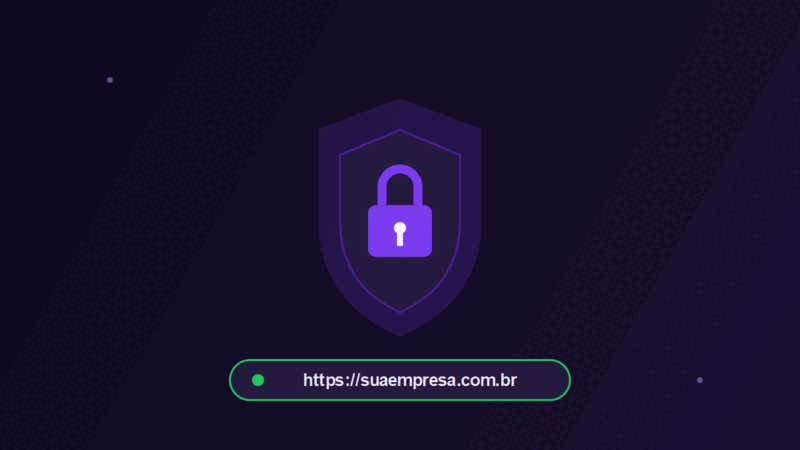
SSL (Secure Sockets Layer) creates an encrypted connection between the visitor's browser and your site's server. Without it, any information typed in — a password, card details, a contact form — travels in plain text and can be intercepted. With SSL active, the address changes from http:// to https://, and the browser shows the padlock.
Why this matters for your business
- Instant trust: browsers like Chrome and Firefox flag sites without SSL as "Not secure," clearly visible in the address bar — that turns visitors away on first impression.
- Real data protection: if your site has a contact form, login, or checkout, SSL protects the information your customers type in.
- Ranking factor: Google confirmed HTTPS as a ranking signal back in 2014. Sites without SSL compete at a disadvantage in search results.
How to check if your site is protected
Just open your site and look at the address bar. If a closed padlock shows up, the certificate is active and valid. If you see a "not secure" warning or an open/red padlock, it's time to act — most reputable hosting providers offer free SSL certificates (via Let's Encrypt, for example) that can be enabled in a few clicks.
At the end of the day, the green padlock is no longer a technical nice-to-have: it's the bare minimum any visitor expects before trusting a site with their data.